


The AEC (Architecture, Engineering, and Construction) industry is undergoing a massive digital transformation. If you are an architect, civil engineer, or MEP professional, you’ve likely heard that transition to digital workflows isn't just an advantage it’s a necessity. However, a common question haunts every aspirant: Does enrolling in a BIM Course actually guarantee a job?
In an era where degrees are common but specialized skills are rare, placement support has become the “X-factor” in professional education. This comprehensive guide explores how a BIM Course bridges the gap between classroom learning and the corporate boardroom, and what you should look for before investing your time and money.

Why Placement Support Matters in a BIM Course:-
Building Information Modeling is not just about learning software like Revit or Navisworks; it is about understanding a collaborative methodology that manages data throughout a building's lifecycle. Because the learning curve is steep, the transition to a professional role can be daunting.
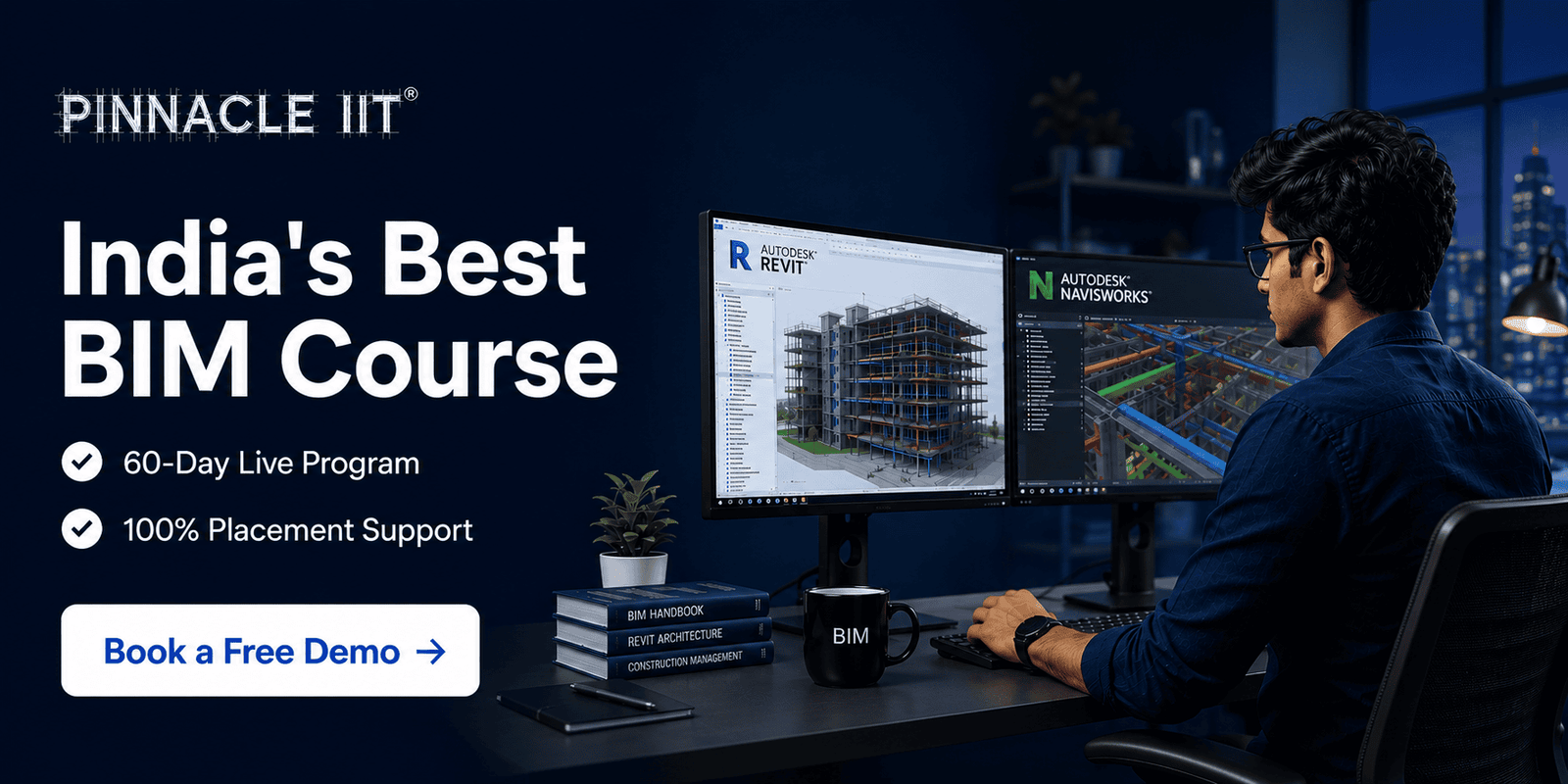
Placement support in a BIM Course acts as a safety net. It ensures that the technical proficiency you gain—such as clash detection, 4D scheduling, or 5D cost estimation is recognized by top-tier global firms. Without dedicated placement assistance, even the most talented modelers might struggle to navigate the complex hiring ecosystem of international AEC giants.
What to Expect from a BIM Course with Placement :-Assistance:-
When you look for a BIM Course, placement support should be more than just a bullet point on a brochure. It should be a multi-layered ecosystem designed to make you “industry-ready.”
1. Portfolio Development and Branding:
In the digital construction world, your portfolio is your blueprint. A high-quality BIM Course will guide you in creating a “Structural Blueprint” of your skills. This includes showcasing live projects, point cloud-to-BIM samples, and complex MEP coordination models. Learn 5 things every BIM portfolio must have to stand out to recruiters.
2. Mock Interviews and Soft Skills:
Technical brilliance is only half the battle. Leading institutes provide training on how to handle technical rounds, specifically focusing on BIM Manager vs. BIM Coordinator roles. They often conduct mock interviews to help you articulate your workflow expertise effectively. Prepare with the Top 10 BIM Model Interview Questions .

3. Direct Access to Global Firms:
Many premier training providers have tie-ups with top 10 global AEC firms. These partnerships often lead to exclusive campus recruitment drives, giving students a direct line to companies that might not even post their openings on public job boards. Explore the Global Guide to Career Growth for BIM Professionals .

The Career Roadmap After a BIM Course:-
The beauty of specialized training is the diversity of roles available. Once you complete a certified BIM Course, your career trajectory shifts from a traditional modeler to a strategic leader. Potential roles include:
- BIM Modeler: Creating detailed 3D models and extracting documentation.
- BIM Coordinator: Managing multidisciplinary coordination and clash detection.
- BIM Manager: Overseeing the entire BIM implementation plan (BIP) and execution plan (BEP) for a firm.
- BIM Developer: Utilizing Python and Dynamo to automate complex Revit tasks.
The salary growth in these roles is significant, with professionals often earning a substantial premium over traditional CAD drafters due to the “BIM Revolution” currently taking over the market.
Why Pinnacle IIT is the Gold Standard for Your BIM Course:-
If you are looking for a program that doesn't just teach but also transforms your career, Pinnacle IIT offers a premier BIM Course designed for the modern AEC professional.
At Pinnacle IIT, the focus is on practical, site-centric learning. Their curriculum covers everything from ISO 19650 standards to Scan-to-BIM workflows and Digital Twin synergy. Most importantly, they understand the Indian and global construction markets deeply, providing students with the networking and placement support needed to land roles in top companies.
Ready to lead the industry? Join the Pinnacle IIT BIM Course and transition from a modeler to a leader today!
FAQ's:-
1. Does every BIM Course offer a job guarantee?
A. No. While many offer “placement support,” a “guarantee” is rare. However, courses with strong industry tie-ups, like those at Pinnacle IIT, have extremely high placement rates due to their practical curriculum.
2. What is the average salary after completing a BIM Course?
A. Salaries vary by region and experience. In India, freshers can expect a significant jump compared to traditional civil roles, while experienced managers can command high-tier packages in the Middle East and Europe.
3. Is placement support available for international jobs?
A. Yes. High-end courses often provide a “Global Guide” to help students find opportunities in international markets where BIM mandates are strictly enforced.
4. Can a Civil Engineer switch to BIM through these courses?
A. Absolutely. In fact, Civil Engineers are the primary candidates for BIM roles, as their structural knowledge is vital for accurate modeling and coordination.
5. How long does it take to get placed after the course?
A. Most students find opportunities within 3 to 6 months of completing their BIM Course, provided they have built a strong portfolio and utilized the institute's placement resources.
Read more on:-
For more information about engineering, architecture, and the building & construction sector, go through the posts related to the same topic on the Pinnacle IIT Blogs page.
Find out more accurately what we are going to take off in the course of applying leading new technologies and urban design at Pinnacle IIT.
Subscribe to our YouTube channel and blog websites to obtain all the up-to-date information relating to construction matters.