
Why Facility Managers Love BIM
BIM transforms facility management by enabling proactive maintenance, optimizing operations, and reducing costs, making it an essential tool.
Why Facility Managers Love BIM Read More »


BIM transforms facility management by enabling proactive maintenance, optimizing operations, and reducing costs, making it an essential tool.
Why Facility Managers Love BIM Read More »

Clash Detection with BIM provides an in-depth exploration of the challenges faced by the construction industry and how Building Information Modeling (BIM) offers transformative solutions. Dive into the intricacies of detecting and resolving construction clashes, understand the revolutionary changes brought by BIM, and stay ahead with insights into future trends in the domain.
Clash Detection with BIM: A Complete Guide Read More »

Building Information Modelling (BIM) is revolutionizing the AEC industry by offering a modern approach to design, promising efficiency, collaboration, and precision. Unlike traditional methods, BIM provides enhanced visualization, real-time collaboration, accurate cost estimations, and efficient design changes. As the future of construction technology, embracing BIM is essential for AEC professionals aiming for success
Advantages of BIM Over Traditional Design Methods Read More »

Structural software has revolutionized the way engineers approach design, enabling them to create safer and more efficient structures than ever before. By automating repetitive tasks, streamlining analysis, and performing complex calculations, software frees up engineers’ time to focus on more complex aspects of the design process. This results in designs that are not only safer and more efficient, but also more cost-effective and sustainable. In this post, we’ll explore the benefits of using structural software in design, and how it can help engineers create structures that meet high standards of quality and safety.
Getting Started with BIM: The Ultimate Primer for Beginners Read More »

Building Information Modeling (BIM) is revolutionizing the construction industry by providing a comprehensive digital model of a building’s physical and functional characteristics. BIM’s ability to integrate design, construction, and operational details into a single database makes it a powerful tool for all stakeholders involved in a building’s lifecycle. By promoting collaboration and communication between project team members, BIM helps to reduce errors and improve project efficiency, ultimately leading to better building outcomes.
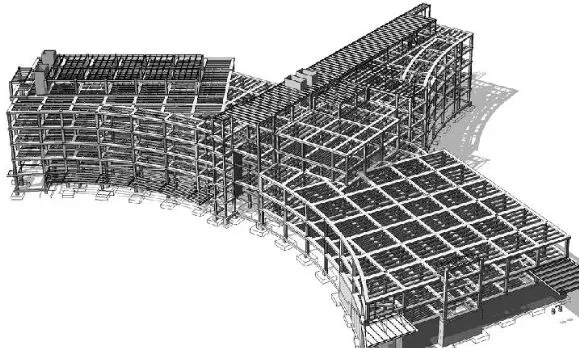
Structural software has revolutionized the way engineers approach design, enabling them to create safer and more efficient structures than ever before. By automating repetitive tasks, streamlining analysis, and performing complex calculations, software frees up engineers’ time to focus on more complex aspects of the design process. This results in designs that are not only safer and more efficient, but also more cost-effective and sustainable. In this post, we’ll explore the benefits of using structural software in design, and how it can help engineers create structures that meet high standards of quality and safety.
Software in Structure Design: The Benefits of Structural Software Read More »