

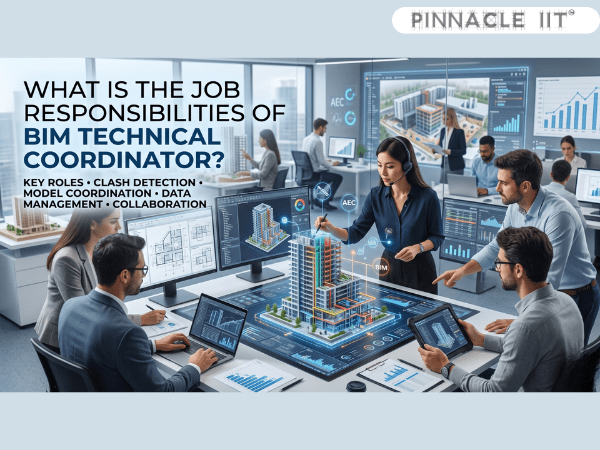
Look, everyone wants to talk about the glamorous side of modern construction tech, but the truth is hidden in the trenches. The person holding the entire digital framework together is the BIM technical coordinator. It is a wild, exhausting, and highly technical role that keeps multi-million dollar projects from collapsing into a pile of scheduling errors and massive budget overruns.
Honestly, I still remember a brutal Tuesday last year on a massive healthcare infrastructure project when the structural team shifted a main load-bearing column by just three hundred millimeters without telling anyone. Naturally, the HVAC subcontractor ran a massive, rigid piece of ductwork straight through that exact space in the digital model. If I hadn't caught that clash during my morning review, it would have cost the client roughly forty thousand dollars in wasted materials and field rework. That is the exact moment you realize this job isn't about passive observation; it is about active, high-stakes digital firefighting.
The Core BIM technical coordinator Tasks Explained:-
So, what does this actually look like on a day-to-day basis? Let's break down the madness because the actual work involves a massive mountain of data validation and constant multi-disciplinary alignment.
Running the Digital Traffic: Clash Detection:
First off, you are the ultimate referee for spatial data. You live inside software like Navisworks, hunting down geometric conflicts before the construction crews ever pour a single ounce of concrete on-site. When the plumbing lines try to occupy the exact same physical coordinates as the electrical cable trays, you find it. You don't just click a button and let the software do it either. Instead, you analyze the tolerance data, filter out the false positives, and assign accountability to the right engineering team. If you want to dive deeper into how this role contrasts with higher-level strategic positions, you can read about the Difference between BIM manager and BIM coordinator to see who handles what.
Enforcing the Rules of the Game:
Data integrity is everything in modern AEC workflows. Every single piece of a 3D model must contain precise information, or the entire database becomes completely useless for the field teams. You spend hours auditing models to ensure that parameters like fire ratings, material specifications, and asset codes match the strict project protocols. When a modeler gets lazy and inputs generic data, you are the one who rejects the file. It is tedious, mind-numbing work, but it keeps the digital twin accurate.
Managing the Chaos Across Teams:-
Coordinating Multi-Disciplinary Models:
Architects, structural engineers, and MEP contractors all build their own separate models in isolation. Your main task is to pull all of these disparate files together into one massive, coordinated master model. Now, this means hosting intensive coordination meetings where you force adults to sit down and agree on who moves their pipes first. You need the patience of a saint and the technical knowledge of an engineer to negotiate these spatial disputes effectively.
Streamlining Software Workflows:
You also serve as the frontline tech support for the modeling team. When Revit crashes because a file is too heavy, or when a data transfer between different software platforms breaks down, your phone rings. You manage the central files, set up the coordinate systems, and establish the shared parameters that keep everyone working seamlessly in the cloud. To see this automated gatekeeping in action, you can master the process by studying BIM clash detection with Navisworks! to streamline your own project data.

FAQ's:-
1. What is the main role of a BIM technical coordinator?
A. The primary role is to combine 3D models from various design disciplines, identify spatial clashes, and ensure the digital construction data is accurate before field work begins.
2. How does this role differ from a BIM Manager?
A. A coordinator focuses on the day-to-day technical execution and clash resolution of a specific project, while a manager handles company-wide standards, software procurement, and high-level strategy.
3. What software tools do they use most frequently?
A. They primarily utilize Autodesk Revit for modeling audits, Navisworks or Solibri for clash detection, and cloud collaboration tools like Autodesk Construction Cloud.
4. Is coding required for this technical position?
A. While it is not strictly required, having a solid grasp of visual programming tools like Dynamo or basic Python can drastically speed up repetitive data validation tasks.
5. Why is this position so crucial for construction projects?
A. By resolving design errors virtually in the 3D model, they prevent incredibly expensive material waste, delays, and legal disputes on the physical job site.
Read more on:-
For more information about engineering, architecture, and the building & construction sector, go through the posts related to the same topic on the Pinnacle IIT Blogs page.
Find out more accurately what we are going to take off in the course of applying leading new technologies and urban design at Pinnacle IIT.
Subscribe to our YouTube channel and blog websites to obtain all the up-to-date information relating to construction matters.