

⏱ 3 min read
Implementing kaizen in construction empowers contracting teams to systematically eliminate jobsite waste, streamline subcontractor coordination, and improve structural quality through continuous incremental refinements. While traditional construction projects suffer from 15% to 30% material waste and chronic scheduling overruns, lean construction frameworks deploy 5S workplace organization, Last Planner System (LPS) milestone commitments, and 4D Building Information Modeling (BIM) to drive site productivity.
Key Takeaways (Quick Overview)
- The 8 Wastes (Muda) Eliminated: Targets overproduction, waiting times, transit bottlenecks, defective re-work, over-processing, excess inventory, wasted motion, and underutilized worker potential.
- 5S Jobsite Framework: Sort, Set in order, Shine, Standardize, and Sustain applied directly to material laydown areas and tool cribs.
- BIM & Lean Synergy: 4D scheduling in Navisworks Manage visualizes daily logistics and eliminates trade stacking before physical work starts.
- Professional Project Management Training: Master digital project delivery in the BIM courses with placement at Pinnacle IIT.
Editorial Note: Technical review conducted in October 2026 by Harsheel Purohit, Director of Project Delivery. Benchmarked against Lean Construction Institute (LCI) standards, Toyota Production System (TPS) guidelines, and ISO 9001 quality management.

Target Audience & Practical Use Case: Tailored for construction project managers, site superintendents, quality assurance engineers, and general contractors. Use these operational Kaizen protocols to shorten project durations and reduce rebar and concrete scrap rates on commercial builds.
What Is Kaizen and How Does It Transform Construction Projects?
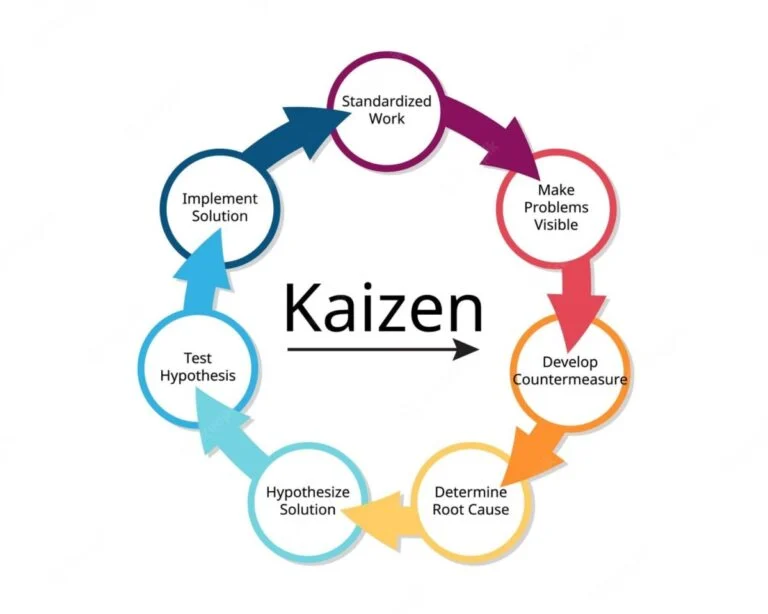
Direct Answer: Kaizen is a Japanese philosophy of continuous, incremental improvement that engages all project participants—from executive project directors to trade foremen—in identifying inefficiencies and standardizing safer, faster workflows. In construction, Kaizen transforms jobsites by replacing reactive crisis management with proactive Daily Standup Huddles, Gemba walks, and root-cause analysis.
Traditional Contracting vs. Lean Kaizen Construction Matrix
| Operational Dimension | Traditional Construction | Kaizen Lean Construction | Performance Gain |
| Workplace Layout | Disorganized staging & scattered tools | 5S standardized color-coded laydown zones | Saves 45 minutes/worker daily |
| Schedule Management | Static Critical Path Method (CPM) | Last Planner System (LPS) weekly lookahead | Improves Percent Plan Complete to 85%+ |
| Defect Resolution | End-of-project snag list punch lists | Zero-defect root cause analysis (5 Whys) | Reduces warranty rework costs by 60% |
| Material Delivery | Bulk staging leading to weather damage | Just-In-Time (JIT) batch delivery | Decreases material scrap below 3% |
| Coordination Technology | 2D paper drawings checked on site | Federated 4D BIM simulations | Resolves 100% of spatial clashes digitally |

How Do You Implement the 5S Methodology on Construction Jobsites?
Direct Answer: Implement 5S on construction jobsites by executing five consecutive steps: Sort (Seiri) to red-tag and remove unusable scrap; Set in Order (Seiton) to establish designated tool and material zones; Shine (Seiso) to clean work areas daily; Standardize (Seiketsu) to post visual signage; and Sustain (Shitsuke) to conduct weekly safety and housekeeping audits.

Frequently Asked Questions on Kaizen in Construction (FAQ)
What are the 8 types of waste targeted by Kaizen on construction sites?
The 8 wastes (DOWNTIME) are: Defects (rework), Overproduction (pre-mature pouring), Waiting (idle trade crews), Non-utilized talent, Transportation (double-handling materials), Inventory (excess materials blocking walkways), Motion (searching for tools), and Extra-processing (over-finishing unexposed concrete).

How does 4D BIM support lean construction?
4D BIM integrates 3D parametric models with project timelines in tools like Navisworks TimeLiner. This allows project managers to simulate crane radius operations, concrete pour sequences, and material staging zones weeks before crews mobilize.
Master Digital Construction Management & 4D BIM
Learn lean project delivery, Navisworks 4D scheduling, and clash detection on live commercial projects with 100% placement support at Pinnacle IIT.